
Switching to eco-friendly cleaning products feels like the obvious move. Then you scrub a bathroom ring with a lavender-scented spray and nothing happens. That failure is why so many people abandon green cleaning before week two.
The issue is not that plant-based cleaners are weak. The issue is that they work differently from the bleach-heavy formulas most people grew up with.
My take on eco-friendly cleaning products: they've earned more credit than the category gets. The performance gap that keeps showing up in reviews is nearly always a usage gap, not a product gap.
This guide is for the skeptic who already bought one eco cleaner, felt let down, and wants to know what to do instead.
Do Green Cleaning Products Really Deliver?
The short answer is yes, when you match the product to the surface and give it time to work. The longer answer is that two common habits cancel out a lot of what plant-based cleaners can do.
The Suds Myth Costing You Clean Dishes
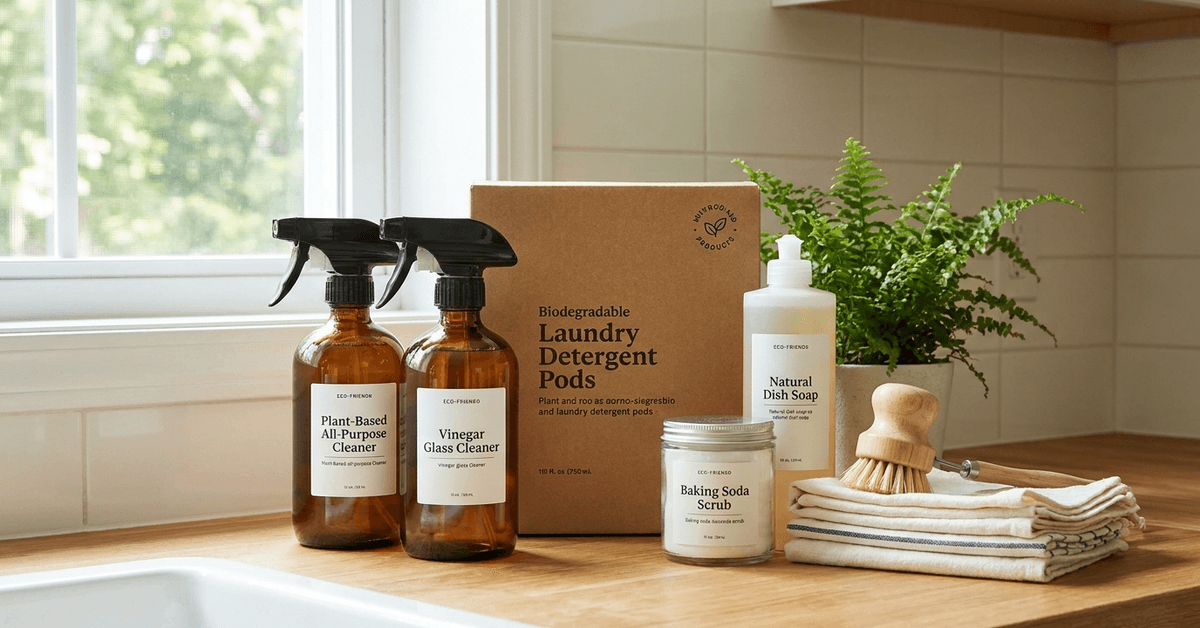
People judge dish soap by how much it foams. Thick lather feels like power. Coconut-derived surfactants, the base of most green dish soaps, produce noticeably less foam than synthetic alternatives.
The dishes come out equally clean. Suds are air, not chemistry. The cleaning industry spent decades conditioning consumers to connect foam with efficacy, and eco cleaners suffer for it every time someone assumes their new plant-based soap wasn't pulling its weight.
Less foam also means faster rinsing. Glasses feel less slippery after washing, and there's less residue left on surfaces. Once you stop measuring soap performance by lather, eco dish formulas stop disappointing.
Reading the Ingredient Label Past the Marketing
"Natural," "green," and "plant-based" appear on labels that don't always back the claim with real ingredients.
A label listing plant-derived surfactants, citric acid, and enzyme blends gives you something to evaluate. A label that just says "eco-formula" does not.
Three ingredients worth looking for in any eco cleaner:
- Citric acid: breaks down limescale and mineral buildup without abrasive scrubbing; particularly effective in bathrooms and around faucets
- Enzyme blends: designed to break apart stain molecules; strongest in laundry detergents and kitchen degreasers
- Coconut or corn-derived surfactants: the primary cleaning agents in plant-based formulas; they lift grease without leaving a residue
Three things worth avoiding in any green-branded formula: phosphates, synthetic fragrances, and parabens. These show up in a surprising number of products marketed as eco-friendly.
The Environmental Working Group's Guide to Healthy Cleaning rates thousands of products by ingredient transparency and health risk. Cross-checking a brand there takes about 30 seconds and cuts through most label confusion fast.
Which Room Needs Which Formula?
Plant-based cleaners are not one-size-fits-all. A citric acid bathroom spray and a kitchen degreaser do very different things, and treating them as interchangeable is where a lot of eco cleaning disappointment starts.
Bathrooms and Kitchens Are a Different Chemical Problem
Soap scum and limescale are mineral deposits. Grease is a fat-based residue. A single all-purpose spray handles neither particularly well.
For bathrooms, citric acid sprays are the right tool. They dissolve calcium and mineral deposits around faucets and on shower tiles without scrubbing.
The trick is contact time: spray, wait three to five minutes, then wipe. Skipping that wait is the reason most people conclude the spray isn't working. For kitchens, an enzyme-based degreaser handles stovetop splatter and range hood buildup.
Two minutes of dwell time before wiping turns a moderate-effort clean into a nearly effortless one. Rushing this step is the single most common reason people conclude that green products underperform.
Laundry: When Plant-Based Enzymes Beat Synthetics
I disagree with the popular advice to pre-soak laundry in baking soda before washing with a natural detergent.
Baking soda is a mild alkali that absorbs odor reasonably well but does not break down protein-based stains like sweat or food splatter. An enzyme pre-spray does that work.
Conflating odor removal with stain removal is why clothes come out of "natural" laundry routines still looking worn.
An enzyme pre-treatment applied 10 minutes before the wash cycle handles the stain chemistry that baking soda simply cannot touch.
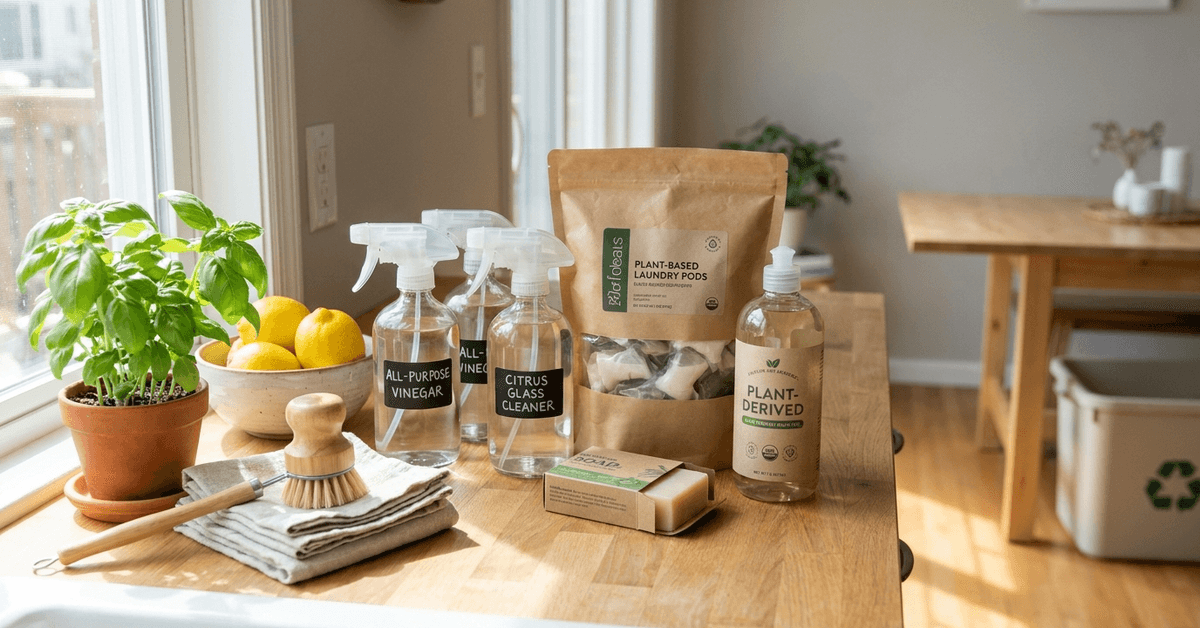
Eco laundry sheets and pods are worth considering beyond their packaging angle. No plastic jug, concentrated formula, and considerably lighter to carry home. They perform well on everyday clothing loads.
For heavily soiled items, the enzyme pre-spray step is what separates a clean load from a grey one.
Green Certifications: Which Seals Mean Something?
How to Use the EPA Safer Choice Database
Not all eco certifications carry equal weight. Some labels are self-issued. Some are licensed by organizations with minimal verification standards. Three that are worth trusting:
| Certification | Issued By | What It Checks |
|---|---|---|
| EPA Safer Choice | U.S. Environmental Protection Agency | Full ingredient safety review, packaging, and manufacturing process |
| EWG Verified | Environmental Working Group | Complete ingredient disclosure and absence of high-concern chemicals |
| USDA Certified Biobased | U.S. Department of Agriculture | Percentage of bio-based, plant-derived content in the formula |
The EPA Safer Choice seal is the one I'd prioritize. It requires manufacturers to submit every ingredient for review and disclose the full formula.
That's not marketing copy. The EPA Safer Choice program has a searchable product database organized by cleaning category, and if you'd rather skip label-reading entirely, searching there by product type does the filtering for you.
Terms like "naturally inspired," "earth-friendly," and "eco-conscious" carry no third-party verification. Treat them as brand voice, not product specs.
Switching Without Throwing Out Everything at Once
A full cabinet replacement is expensive and hard to evaluate fairly. Running through one product type at a time gives you a real comparison and a natural exit point if something doesn't work.
Start with dish soap or a multi-surface spray. These get used daily and take about a week to judge properly. If performance holds, laundry detergent is the logical next step.
A few things that make the transition go more smoothly:
- Give acid sprays contact time. Two to five minutes of dwell time changes the result on mineral deposits more than any amount of scrubbing will.
- Pair glass cleaners with microfiber cloths. Eco glass formulas perform well, but cotton rags leave streaks that get blamed on the spray.
- Use refill pouches where available. Several brands now sell concentrated refills that cost less per use than a new bottle and produce almost no packaging waste.
- Patch test natural cleaners on porous surfaces. Some essential oils, particularly tea tree, can affect certain sealants over repeated use.
One thing worth skipping entirely: homemade vinegar-and-water sprays. This will frustrate people who've read a hundred green-living articles recommending them.
The specific reason: a diluted vinegar solution has no verified pathogen kill rate on kitchen surfaces, and it degrades quickly in a spray bottle.
Commercially formulated eco cleaners are tested for microbial efficacy and shelf stability. A spray bottle of diluted white vinegar sitting under the sink for three weeks is not the same product.
Questions People Ask About Eco-Friendly Cleaning Products
Q: Do eco-friendly cleaners disinfect or just clean surfaces? Plant-based cleaners generally clean surfaces but don't disinfect. For true disinfection, look for EPA-registered products specifically labeled as disinfectants. Some brands offer a general cleaner and a separate disinfecting spray, giving you both without the harshest chemicals.
Q: Are green cleaners safe for septic systems? Plant-based, biodegradable, and phosphate-free formulas are generally safer for septic systems than conventional cleaners because they break down faster and are less likely to disrupt the bacterial balance in the tank. Check the product label for a septic-safe designation if this applies to your home.
Q: Can eco products handle pet stains and odors? Enzyme-based formulas are among the strongest tools for pet accidents. The enzymes break down the proteins causing the odor rather than masking them with fragrance. Several eco brands make enzyme cleaners designed specifically for pet stains, and they perform at the same level as conventional alternatives.
Q: Do essential oils in green cleaners kill germs? Tea tree oil and thymol (derived from thyme) have documented antimicrobial properties, but the concentration in retail cleaners is too low to count as disinfection. They contribute to scent and light surface cleaning, not pathogen elimination. For high-risk kitchen or bathroom surfaces, use an EPA-registered disinfectant.
Q: Is the price premium for eco cleaners worth it in 2026? The price gap has narrowed considerably since 2023. Concentrated formulas and refill systems bring the per-use cost close to conventional products. Buying concentrated and refilling a single spray bottle each month consistently costs less than buying a new conventional bottle at full volume.
Conclusion
Eco-friendly cleaning products have closed most of the performance gap that gave the category a rough reputation years ago. The remaining frustrations almost always trace back to a mismatch between product type and surface, or a skipped contact time step.
Matching the right formula to each surface and giving it proper contact time closes most of the performance gap people complain about. The next time a green spray disappoints you, check the contact time before changing the product.